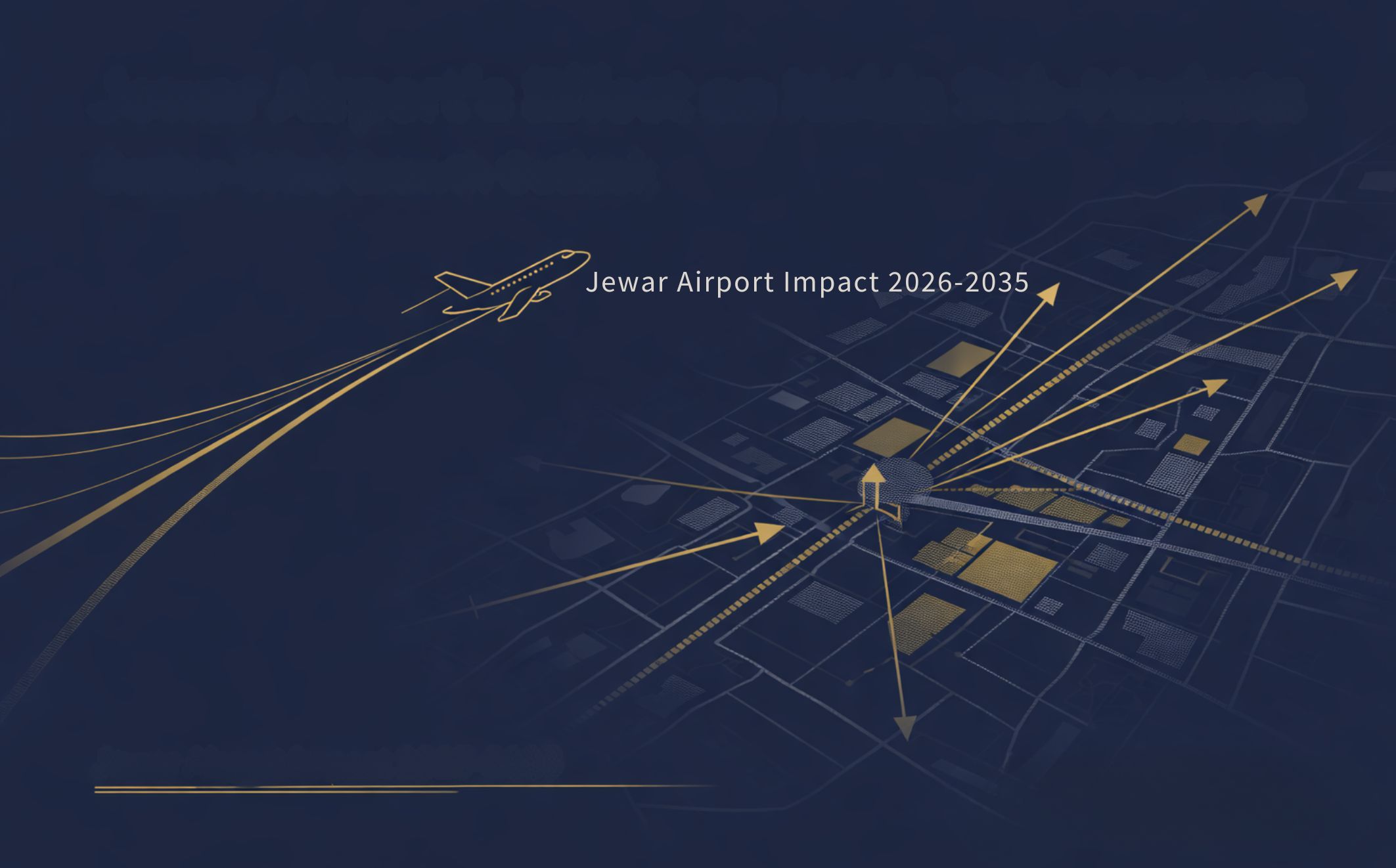
Jewar Airport’s Effect on Noida Sub-Markets: Sector-Wise Growth Outlook (2026–2030)
Introduction:
The announcement and ongoing development of Noida International Airport (Jewar Airport) represents one of the most consequential infrastructure projects in North India in decades. Strategically located near Greater Noida, Jewar Airport is projected to be one of Asia’s largest aviation hubs, positioning itself as a catalyst for economic transformation across the National Capital Region (NCR). As India continues its ascent as a global economic contender, infrastructure projects such as Jewar not only improve connectivity but also fundamentally reshape real estate dynamics.
Noida and Greater Noida have long been at the forefront of NCR’s real estate growth story. With Jewar Airport, this evolution is now entering a new and expansive chapter. Investors, end-users, and NRIs are increasingly focusing on how this mega airport will influence property demand, pricing trajectories, and sector-level preferences between 2025 and 2030.
In this deep-dive article, we explore:
- How major airports historically impact property markets
- Noida’s strategic advantages around Jewar Airport
- Sector-wise growth opportunities
- Residential and commercial trajectories
- Smart buying strategies in the coming decade
Why Airports Transform Property Markets
Airports are much more than transit hubs. They anchor cities and regions in ways that ripple out into business, logistics, employment, and real estate. Globally, airports have become magnets for investment and urban expansion — and Jewar is expected to follow this pattern.
Catalysts for Economic Activity
Airports spur the development of business parks, corporate offices, logistics nodes, and hospitality infrastructure. Proximity to an international airport significantly enhances a location’s appeal for multinational corporations, regional headquarters, and foreign direct investment.
Examples:
- Dubai International Airport helped propel Dubai from a regional hub into a global city, stimulating retail, office, and residential markets.
- Hyderabad’s Rajiv Gandhi International Airport accelerated growth in surrounding suburbs like Gachibowli and Raidurg, making them top IT and residential corridors.
- Kempegowda International Airport (Bengaluru) influenced the rise of North Bengaluru as a twin growth engine alongside the traditional IT corridor.
Boosting Rental Demand
Airport-linked development typically attracts working professionals — from airline staff to business travelers — creating consistent rental demand. Areas near transit infrastructure see average yields increase as a result of improved desirability and mobility.
Land Value Appreciation
Accessibility and future economic activity contribute to systematic land value appreciation. As basic services and connectivity improve, peripheral sectors become integrated into the broader urban fabric, often catching investors early in the cycle.
Noida’s Strategic Position Around Jewar Airport
Noida and Greater Noida enjoy a unique geographic and infrastructure advantage that positions them as natural beneficiaries of Jewar Airport’s development.
Expressway Connectivity
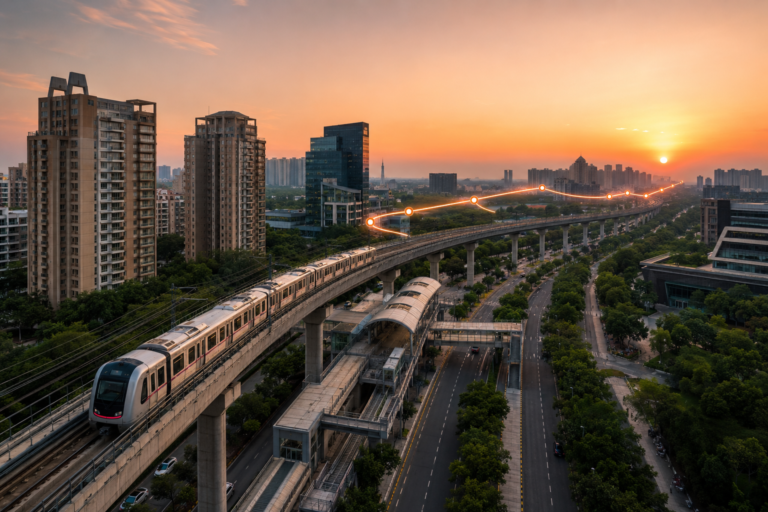
The Yamuna Expressway links Noida with Jewar, providing a high-speed connection to the airport. This reduces travel time and enhances commuter convenience, making nearby sectors attractive for long-term residential and commercial occupancy.
Metro Expansion
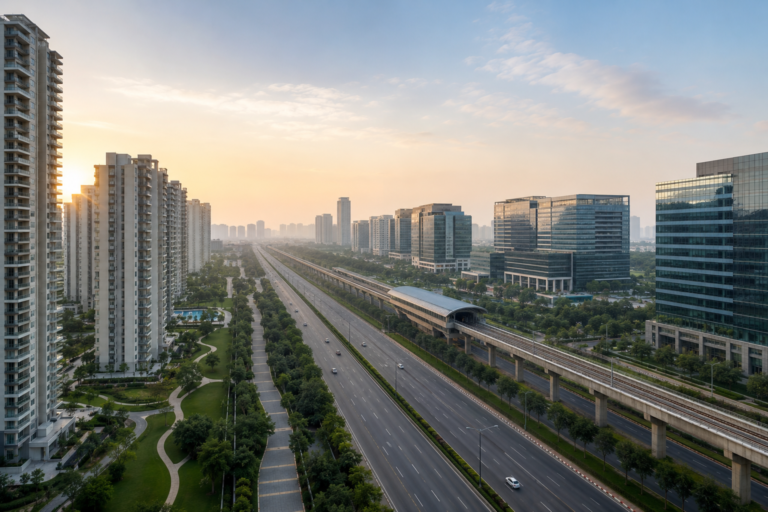
Plans for metro extensions connecting Noida and Greater Noida to Jewar Airport will further improve transit efficiency. Seamless connectivity to the airport via mass rapid transit is a major value driver that enhances liveability and reduces dependency on road-only travel.
Industrial & Logistics Corridors
Industrial zones along the expressway — supported by robust road infrastructure — position Noida as a logistics and warehousing hub. Jewar Airport’s cargo handling capacity will only amplify these opportunities.
Film City & Commercial Hubs
Developments such as the proposed Film City and other commercial zones promise diversified economic growth. Integrated with airport-led expansion, these zones will not only generate employment but also stabilize long-term residential demand.
In sum, Noida’s geographic connectivity, infrastructure plans, and economic ecosystem make it a perfect partner for Jewar Airport’s growth narrative.
Sector-Wise Impact Analysis
Noida and Greater Noida each host sub-markets with unique dynamics. Jewar Airport’s development will affect them differently — based on proximity, infrastructure, and the type of demand they attract.
📍 Sector 150 – Premium & Luxury Living
Growth Logic:
Sector 150, already known for spacious layouts and premium positioning, will benefit from increased demand from airport-linked executives and global professionals.
Who Will Buy?
• High-net-worth individuals seeking quality living
• Corporate relocates prioritizing calm, premium environments
• NRIs planning future relocation
Why Demand Will Rise:
• Close to existing highways and metro extensions
• Lifestyle-focused developments
• Well-reviewed schools and healthcare nearby
📍 Sector 128 / 129 – Office Parks & Executive Housing
Growth Logic:
This corridor is established as an office and executive residential hub. Jewar Airport boosts demand by enhancing corporate mobility and making this location more attractive for professional occupancy and office leases.
Key Drivers:
• Connectivity to expressways
• Office clusters and amenities
• High demand for quality leases
📍 Sector 62 / 63 – IT Parks & Rental Demand
Growth Logic:
Sectors 62 and 63 are known for IT parks and corporate campuses. The ease of traveling in and out via Jewar will further enhance this sub-market’s appeal.
Who Will Rent?
• IT professionals
• Frequent business travelers
• Tech workers requiring long-term stays
Rental Growth:
Improved commute and connectivity boost rental yields as companies lease housing near work hubs.
📍 Noida Expressway – Corporate + Residential Corridor
Growth Logic:
The Expressway corridor already benefits from strong corporate presence and residential demand. Jewar integration enhances this appeal.
Why It Matters:
• Continuous demand from office workers
• Strong infrastructure support
• Excellent schools and lifestyle facilities
This makes the Expressway corridor a balanced growth zone for both rental and capital appreciation.
📍 Greater Noida West – Affordable + Mass Housing
Growth Logic:
Greater Noida West has been a value-led residential magnet. With Jewar Airport’s ripple effect, this affordability-driven zone is set for a new wave of demand.
Who Will Buy?
• First-time homebuyers
• Value-conscious investors
• Families planning long-term residence
Why Demand Will Rise:
• Lower entry price points
• Proximity to smart infrastructure
• Large-scale developments with planned amenities
📍 Yamuna Expressway Belt – Industrial & Logistics Growth
Growth Logic:
This belt will emerge as a hub for warehousing, logistics, and data centres — because proximity to Jewar Airport streamlines cargo movement and international freight logistics.
Who Benefits?
• Logistics developers
• Industrial investors
• Data centre operators
This sector’s growth is driven less by residential demand and more by institutional investment and commercial aggregation.
Residential Market Outlook
End-User Demand
As infrastructure improves, families and professionals increasingly prefer Noida sub-markets that offer both comfort and commute convenience. Ready-to-move and near-possession properties remain attractive due to lower risk and faster occupancy.
Rental Growth Potential
Jewar Airport’s operational status boosts rental demand significantly. Professionals, airport staff, airline employees, and corporate tenants tend to seek housing near transit-enabled hubs.
Premium vs Affordable Housing
Jewar’s impact will notably contract real estate cycles:
- Premium housing will see paced appreciation due to stable outflow of high-income buyers.
- Affordable and mid-segment housing will benefit through higher absorption, as value-first buyers seek future connectivity.
NRI & Corporate Leasing
NRIs planning relocation or long-term investment will favor future-ready corridors, particularly those with strong infrastructure and sustained demand.
Commercial & Industrial Boom
Jewar Airport’s influence is not limited to residential demand. It expands the canvas for:
Business Parks
- Corporate campuses
• HQ offices
• Support services
Warehousing & Logistics
The airport’s cargo handling will create a logistics ecosystem, benefiting developers and investors.
Data Centres
Data centres seeking connectivity and low-latency infrastructure will find the extended NCR region attractive.
Hotels & Hospitality
Airport-adjacent sectors will see increased hospitality demand, from business stays to transit tourists.
Retail & Mixed-Use Development
As employment hubs rise, integrated retail and lifestyle nodes will follow suit, generating multi-layered demand.
Investor Opportunity Window (2025–2028)
Investors who enter before full airport operations stand to gain early pricing advantage:
- Capital appreciation as corridors mature
- Rental yield growth due to infrastructural activation
- Portfolio diversification into emerging yet stable sub-markets
Time is critical. Early positioning in strategic sectors often yields greater returns.
Risks & Smart Buying Tips
While Jewar presents strong prospects, responsible investing requires due diligence:
Sector Selection
Identify sectors with:
• Transit linkages
• Established amenities
• Infrastructure execution certainty
Builder Quality
Preference to:
• Reputed developers
• Completed projects
• RERA-compliant inventory
Delivery Timelines
Monitor:
• Construction status
• Infrastructure commissioning schedules
• Connectivity updates
Smart buyers mitigate risk through verified project analysis and timely decisions.
Why First Step Realtors
Choosing the right real estate partner makes a measurable impact:
✔ In-depth market research & insights
✔ Sector-wise advisory for Jewar-related growth
✔ Project verification & compliance checks
✔ Negotiation support & documentation guidance
✔ Honest, client-first real estate consultancy
At First Step Realtors, we empower buyers and investors with clarity, confidence, and context — not just choices.
Conclusion
Jewar International Airport is more than just an aviation project — it is a long-term growth engine for Noida and its surrounding sub-markets. As road and metro infrastructure matures in tandem with airport developments, residential and commercial demand will continue to rise. From luxury enclaves and office corridors to affordable mass housing and logistics belts, each sector has a compelling narrative of growth.
For investors, end-users, and NRIs looking ahead to 2030, Noida represents a strategic, resilient, and future-ready real estate destination.
Want to invest in Jewar-driven Noida growth?
Contact First Step Realtors for sector-wise guidance and verified opportunities.
📞 9811484655
🌐 www.firststeprealtors.in
Disclaimer
This article is for informational purposes only. Real estate markets depend on policy changes, infrastructure progress, economic conditions, and execution timelines. Buyers and investors should conduct independent due diligence and consult professional advisors before making property-related decisions.