Smart Homes are No Longer a Luxury — They’re a Necessity
A few years ago, smart homes were seen as a premium add-on. Automated lights, app-controlled curtains, voice assistants, and digital locks were considered luxury features meant only for ultra-premium homes.
In 2026, that mindset has changed.
Smart homes are no longer just about showing advanced technology. They are about convenience, security, comfort, energy efficiency, and future-ready living. For modern homebuyers, especially in luxury real estate markets like Noida, Gurgaon, Delhi NCR, and other growing urban centres, smart home features are becoming an expected part of premium living.
According to the Day 6 blog plan, this topic focuses on the rise of voice-controlled luxury homes and why smart homes are now moving from luxury to necessity.
1. The Meaning of Luxury Has Changed
Luxury real estate is no longer defined only by location, size, marble flooring, or branded fittings. Today’s buyers want homes that make life simpler.
A modern luxury home should understand daily routines. It should support comfort, safety, work, wellness, and energy savings. This is why smart home automation has become so important.
Buyers now expect features like:
Voice-controlled lighting
App-based air conditioning control
Smart door locks
Video door phones
Automated curtains
Motion sensors
Smart security cameras
Energy monitoring systems
Smart appliance integration
Centralized home control panels
These features are not just stylish. They solve real daily problems.
2. Convenience is Now a Core Buying Factor
Today’s homebuyers live busy lives. Many professionals manage work calls, family responsibilities, travel, fitness routines, and social commitments every day. A smart home reduces small daily efforts and makes life more convenient.
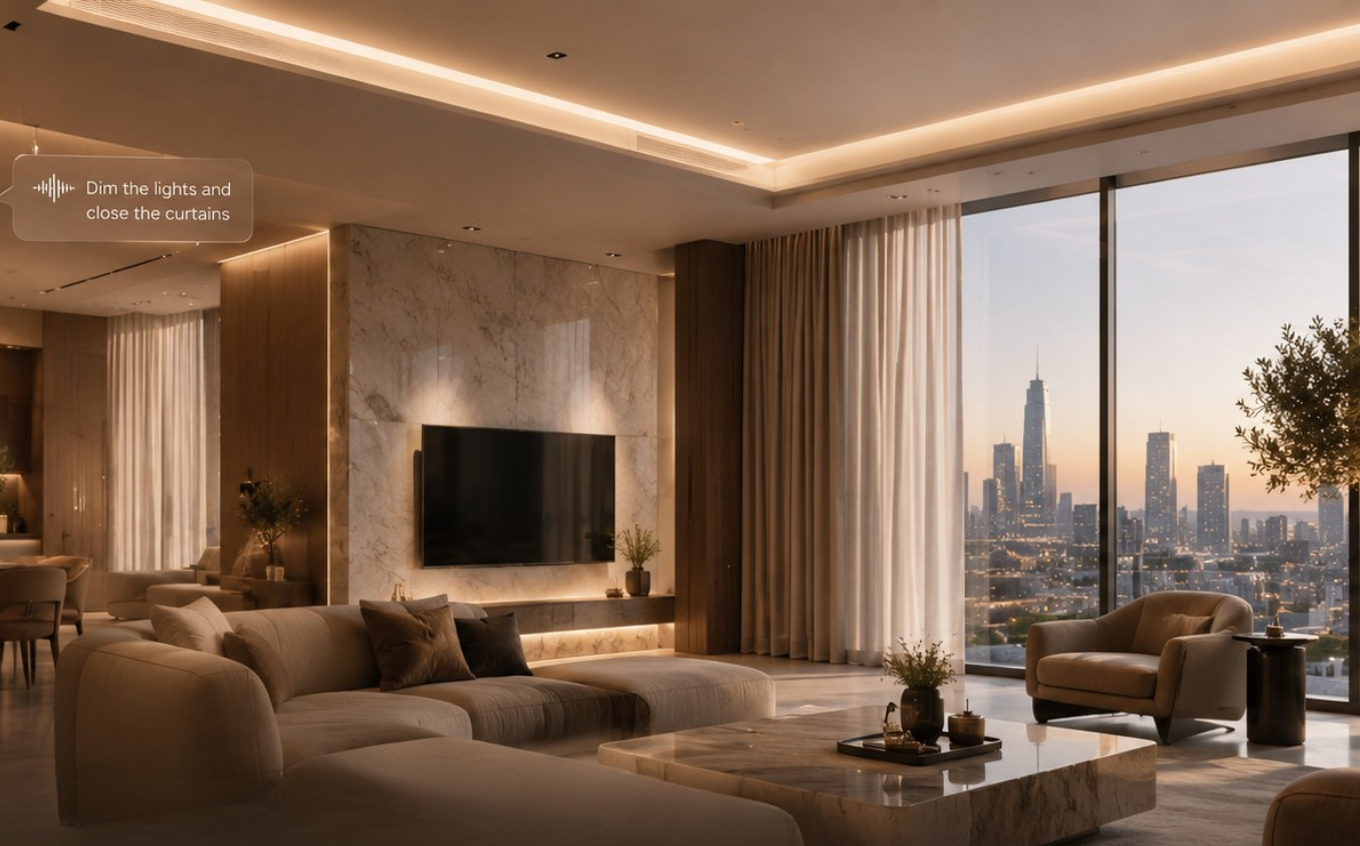
Imagine entering your home and the lights automatically turn on. The air conditioning adjusts before you arrive. The curtains open with one voice command. Security cameras can be checked from your phone. Guests can be allowed entry remotely. Appliances can be monitored even when you are outside.
This convenience is why smart home technology is becoming a serious decision-making factor for premium buyers.
Global demand also supports this shift. MarketsandMarkets projects the global smart home market to grow from around USD 230.76 billion in 2026 to USD 450.20 billion by 2032, with Asia Pacific expected to register the highest growth rate.
3. Security Has Become Smarter
Security is one of the strongest reasons buyers prefer smart homes.
Earlier, residential security mainly meant guards, gates, and CCTV cameras. Today, smart security includes multiple layers of protection.
Modern smart security features can include:
Digital locks
Biometric access
Video door phones
Smart visitor management
Motion sensors
Remote camera access
Emergency alerts
App-based entry approvals
Smart parking access
Integrated fire and gas sensors
For families, senior citizens, NRIs, and frequent travellers, this creates peace of mind. Buyers want to know that their home is secure even when they are not physically present.
This is especially relevant in premium apartments, gated communities, and branded residences where safety, privacy, and controlled access are major expectations.
4. Smart Homes Support Energy Efficiency
Smart homes are also becoming important because of energy efficiency.
In large luxury homes, electricity consumption can be high because of air conditioning, lighting, appliances, water heating, and entertainment systems. Smart systems can help manage energy use better.
For example, smart lighting can turn off automatically when a room is empty. Smart thermostats can adjust cooling based on occupancy. Energy monitoring systems can show where electricity is being used. Automated curtains can help control heat and natural light.
This makes smart homes more practical and sustainable.
In 2026, buyers are becoming more aware of long-term running costs. They are not only asking about the purchase price. They are also thinking about maintenance, electricity consumption, efficiency, and environmental impact.
5. Hybrid Work Has Made Smart Homes More Relevant
The rise of hybrid work has changed how people use their homes.
A home is no longer only a place to relax after work. It is also a workplace, meeting room, study zone, creative space, and family environment. This has increased demand for homes that support productivity and comfort.
Recent reporting from Economic Times noted that up to 40% of NCR buyers now prefer homes with dedicated workspaces as work-from-home behavior reshapes buying preferences.
Smart homes support this lifestyle through better lighting, sound control, high-speed connectivity, temperature control, and automation. A private workspace with smart lighting, strong internet setup, and comfortable climate control can improve daily productivity.
For luxury buyers, this matters because work-life balance is now part of premium living.
6. Smart Homes Improve Everyday Wellness
Smart home technology is also connected to wellness.
In 2026, wellness-focused living is becoming one of the biggest luxury real estate trends. Buyers want homes that support better air quality, better sleep, better lighting, and better comfort.
Smart wellness features may include:
Air quality monitors
Smart air purifiers
Circadian lighting
Automated temperature control
Humidity control
Noise monitoring
Water quality systems
Sleep-friendly lighting modes
These features help create a healthier indoor environment. In cities like Delhi NCR, where air quality and urban stress are major concerns, smart wellness systems can become a strong value addition.
7. Developers are Making Smart Features Standard
Earlier, smart features were mostly optional upgrades. Now, many premium developers are including automation as part of the project offering.
This is happening because buyer expectations have changed. A luxury project without smart features may feel incomplete in 2026.
Developers are now adding smart access, app-based facility management, smart parking, digital visitor management, automated club access, smart lighting in common areas, and home automation-ready infrastructure.
The smart home market’s projected growth in India also reflects rising adoption. Fortune Business Insights projects India’s smart home market to reach USD 6.97 billion in 2026.
For real estate buyers, this means smart technology is becoming part of the standard premium package rather than a rare luxury feature.
8. Smart Homes Can Improve Resale Appeal
A future-ready home usually has better appeal in the resale market.
When buyers compare two similar properties, smart features can influence the decision. A home with better security, automation, energy control, app-based convenience, and modern infrastructure can feel more attractive than a basic home in the same location.
This does not mean smart features alone guarantee higher resale value. Location, developer reputation, construction quality, legal approvals, maintenance, and overall project demand still matter more. But smart home readiness can improve the perceived value of the property.
In luxury markets, perception matters. Buyers want homes that feel modern, relevant, and future-proof.
9. What Buyers Should Check Before Choosing a Smart Home
Not every project that says “smart home” offers real value. Buyers should check what is actually included.
Before buying, ask:
Are smart features included or charged separately?
Which systems are app-controlled?
Are devices compatible with common platforms?
Is there centralized control?
What happens if internet connectivity fails?
Are security systems integrated with the society system?
Who maintains the automation system?
Are warranties provided?
Can the system be upgraded later?
Is the wiring automation-ready?
A truly smart home should be useful, reliable, secure, and easy to maintain.
Conclusion
Smart homes are no longer just a luxury feature. In 2026, they are becoming a necessity for modern living.
Buyers want homes that are convenient, secure, energy-efficient, wellness-focused, and ready for hybrid lifestyles. From voice-controlled lighting to smart security and air quality systems, technology is now deeply connected to how people experience premium homes.
For Noida and NCR’s luxury real estate market, smart home features are no longer optional extras. They are becoming part of the new definition of luxury.
The future of real estate belongs to homes that are not only beautiful, but intelligent.
Disclaimer
This blog is for informational and educational purposes only. Smart home features, automation systems, project specifications, pricing, maintenance costs, security systems, and technology availability may vary depending on the developer, location, project category, and market conditions.
Readers should verify RERA registration, legal approvals, project specifications, included automation features, service charges, warranties, pricing, possession timelines, and investment suitability before making any property-related decision. This blog should not be considered legal, financial, or investment advice.