Noida Metro Expansion and Property Buying: How to Evaluate “Near Metro” Claims
“Near upcoming metro” is one of the most common lines in a Noida property pitch. It can describe a genuinely useful transit advantage—or a proposed station several kilometres away with no comfortable last-mile route.
Metro connectivity can improve daily mobility, widen the tenant pool and reduce dependence on cars. But the property impact depends on project status, station access, interchange quality, travel time and the nature of the surrounding neighbourhood. Buyers should therefore evaluate the complete journey, not the distance to a line on a map.
As of August 2026, NMRC’s official upcoming-projects page lists three Aqua Line extensions: Sector 51 to Knowledge Park V, Sector 142 to Botanical Garden, and Depot Station to Boraki. Each serves a different travel pattern. This guide focuses on how Noida buyers can translate such infrastructure information into a disciplined property decision.
First classify the metro claim
Every metro reference should be placed in one of these categories:
- operational and in regular passenger service;
- under construction with visible work and an official execution schedule;
- approved with a published project framework;
- officially proposed or listed as upcoming; or
- only discussed in sales material or informal news.
These stages do not carry equal certainty. Never price a proposed benefit as if the station were open today.
Use the official NMRC website for Aqua Line information and DMRC’s official sources for Delhi Metro links. Save the page or document date because alignments and timelines can evolve.
Understand what the official extensions are designed to do
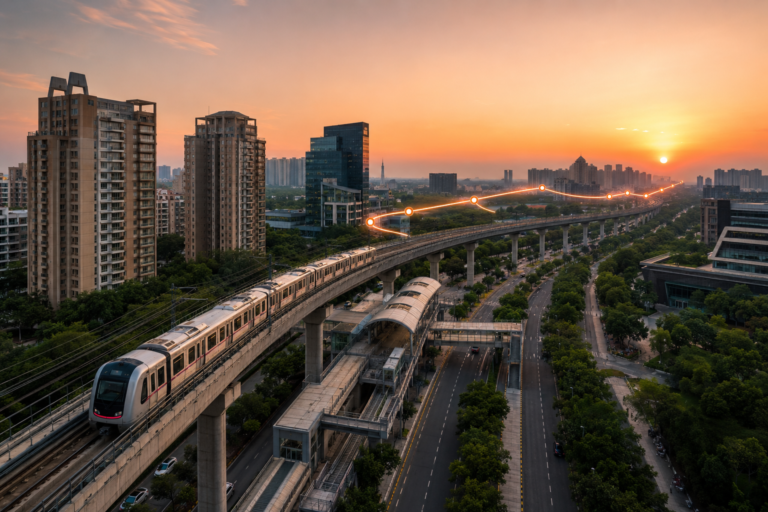
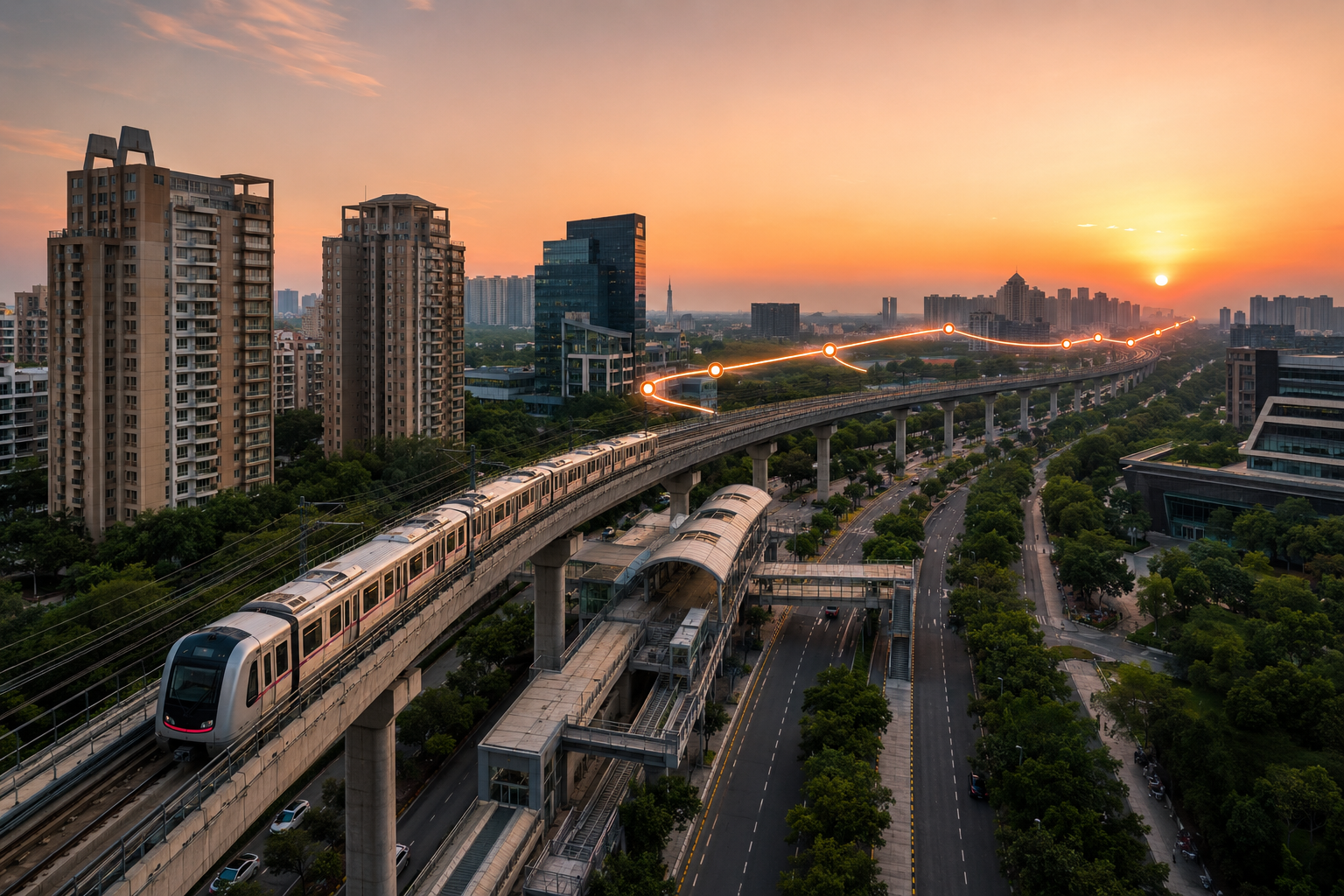
NMRC describes the Sector 51 to Knowledge Park V extension as approximately 17.4 kilometres with 11 elevated stations, intended to serve Noida, Greater Noida West and Greater Noida and connect with the existing Aqua Line and DMRC Blue Line through the Sector 61 interchange.
The Sector 142 to Botanical Garden extension is listed at approximately 11.56 kilometres with eight elevated stations. NMRC says Botanical Garden would connect the Aqua Line with the Magenta and Blue lines, benefiting commuters along the Noida-Greater Noida Expressway.
The Depot to Boraki extension is shorter and designed to support a multimodal interchange with rail, bus and other transport facilities.
For a Noida-city homebuyer, the Sector 142-Botanical Garden link can be particularly relevant to Expressway employment and residential sectors, while the Sector 51 link changes the wider western network. Relevance still depends on the actual station and route from the selected property.
Measure door-to-door travel, not map distance
A home 1.5 kilometres from a station may be more convenient than one 700 metres away if the first has a safe, direct route and the second sits across a high-speed road or inaccessible plot.
Test:
- walking distance and footpath continuity;
- road crossings and lighting;
- auto, e-rickshaw and feeder availability;
- drop-off and parking space;
- monsoon conditions;
- lift or escalator access; and
- security for early or late travel.
Walk the route yourself. A satellite map cannot show broken pavements, barricades, service-road gaps or peak-hour conflict points.
Count interchanges and total journey friction
The closest station is not always the fastest commute. A route requiring two interchanges, a long platform walk and unreliable last-mile transport may lose its advantage.
Build the real journey:
home to station + waiting time + train time + interchange time + destination last mile.
Compare it with the road journey at the hours you actually travel. For a household with different workplaces or schools, test each major trip.
The value of the proposed Sector 142-Botanical Garden corridor, for example, lies not only in new stations but also in potential interchange with major DMRC lines at Botanical Garden.
Consider the resident and tenant profile
Metro proximity matters most when the likely resident regularly uses the network. It may be valuable for professionals working in Noida or Delhi, students, smaller households and tenants without multiple cars.
A large luxury apartment aimed at families who drive to dispersed destinations may gain less from a station than a compact rental unit near an office corridor. Conversely, reliable metro access can still support household flexibility and resale demand.
Match the infrastructure benefit to the unit type and target resident rather than treating “metro” as a universal premium.
Balance access with noise and congestion
Living immediately beside an elevated corridor or busy station can introduce train noise, traffic, vendors, parking spillover and reduced privacy. Visit comparable operational stations to understand the likely environment.
Check the unit’s orientation, height, glazing and distance from the alignment. A station within a comfortable walk can be better than a tower overlooking the viaduct.
Study land use around the proposed station
The strongest transit locations usually combine housing, employment, retail and safe pedestrian access. A station surrounded by vacant parcels may take time to develop a complete neighbourhood.
Review the authority’s land-use plan and nearby sanctioned projects. Ask what sits between the property and the station: residential plots, commercial development, drain, village road, institutional land or a future construction zone.
Do not assume every open parcel will become a park or market.
Separate present value from future optionality
An upcoming station can be treated as future optionality, not the sole reason to buy. The property should still work on today’s fundamentals:
- livable approach roads;
- water and power reliability;
- occupied social infrastructure;
- legal and RERA clarity;
- appropriate purchase price; and
- acceptable commute without the proposed line.
If the property is uncomfortable until the metro opens, the buyer is taking both project risk and infrastructure risk.
Avoid paying the entire future premium upfront
Ask for prices of comparable societies with operational metro access, proposed access and no direct access. If the upcoming station has already been fully priced in, the future upside may be limited while execution risk remains.
Negotiate on the property’s current usability and documented project status. Avoid guaranteed-appreciation claims. Infrastructure can support demand, but property performance also depends on supply, developer quality, maintenance, unit efficiency and market conditions.
Knight Frank’s Q1 2026 report describes a broader residential market entering a more cautious, price-sensitive phase. That makes disciplined entry price more important even in infrastructure-led locations.
Verify the claim in writing
Ask the salesperson to identify:
- the official corridor name;
- nearest proposed or operational station;
- approximate walking and driving route;
- current project stage;
- official source; and
- whether the marketing distance is straight-line or road distance.
If the answer relies on “proposed” without an official source, do not use it as a valuation assumption.
A metro-impact scorecard for Noida property
Score each factor from one to five:
- official certainty of the corridor;
- door-to-station access;
- interchange quality;
- door-to-work travel-time improvement;
- pedestrian safety;
- tenant relevance;
- noise and congestion impact;
- present-day neighbourhood quality; and
- price premium already charged.
A property with a balanced score is usually more defensible than one with a spectacular map claim but weak daily access.
Questions to ask during the site visit
- Which station will serve this project?
- Is the corridor operational, under construction, approved or proposed?
- What is the official source and last update?
- Can we walk the actual route now?
- How many interchanges are required for Sector 18, Botanical Garden, Delhi or my workplace?
- Will the tower face the viaduct or station traffic?
- What other land uses are planned near the station?
- Does the quoted property premium assume metro completion?
Final takeaway
Metro connectivity is valuable when it changes a real journey. Evaluate official status, safe access, interchanges and present-day liveability before paying a “near metro” premium. The strongest Noida properties do not rely on one future line; the line strengthens an already functional location.
First Step Realtors can help you compare Noida sectors using actual commute patterns and unit-specific site visits. Visit www.firststeprealtors.in or call +91 9811454655.
FAQs
Which Aqua Line extensions are officially listed by NMRC?
NMRC lists Sector 51-Knowledge Park V, Sector 142-Botanical Garden and Depot-Boraki on its upcoming-projects page as of August 2026.
How close should a flat be to a metro station?
There is no universal distance. A safe, direct 10-15 minute walk can be more useful than a shorter but inaccessible route.
Does an upcoming metro guarantee property appreciation?
No. It may support accessibility and demand, but price, supply, delivery, maintenance and the wider location still determine performance.
Suggested internal links
- Live Near Work: Noida Expressway Homebuying Guide
- Noida Airport Is Operational: What Changes for Buyers
- Total Cost of Buying Property in Noida
Sources
- NMRC upcoming Aqua Line projects
- NMRC current network and passenger information
- Knight Frank India Real Estate Q1 2026
Disclaimer: Metro routes, approvals, construction schedules and station locations can change. Verify current official information before making a property decision.