High-Rise Fire Safety in Noida: A Homebuyer’s Inspection Checklist
High-rise homebuyers naturally focus on view, floor plan, clubhouse and lift speed. Fire safety rarely receives the same attention, even though it affects every resident and cannot be corrected inside one apartment alone.
A fire-safety certificate or NOC is important, but a document does not prove that every system is currently functional, accessible and maintained. Buyers should verify official records and inspect the physical building with the society or facility team.
This checklist is designed for homebuyer awareness, not as a professional fire audit. Engage a qualified fire-safety expert for technical certification or where any concern appears.
Begin with the correct project and tower documents
Ask for the applicable fire-safety approval or NOC details and the Completion or Occupancy Certificate for the phase containing the selected tower. Confirm that the document covers the correct building, use and height.
The Uttar Pradesh Police’s official Fire Services Portal page links to the Fire Services system and a Verify NOC facility. Use official verification rather than a screenshot forwarded in a messaging group.
Also search the project on UP-RERA and review uploaded approvals. Large developments may have separate phases, so verify the selected tower rather than the brand name alone.
Check whether the building matches the approved use
Fire design depends partly on occupancy and use. A residential area used as a banquet hall, office, storage space or commercial operation can change the risk profile and obstruct intended circulation.
Walk through basements, podiums and common areas. Look for unauthorised storage, enclosed passages or altered service rooms. Ask the facility manager whether any major modifications occurred after approval.
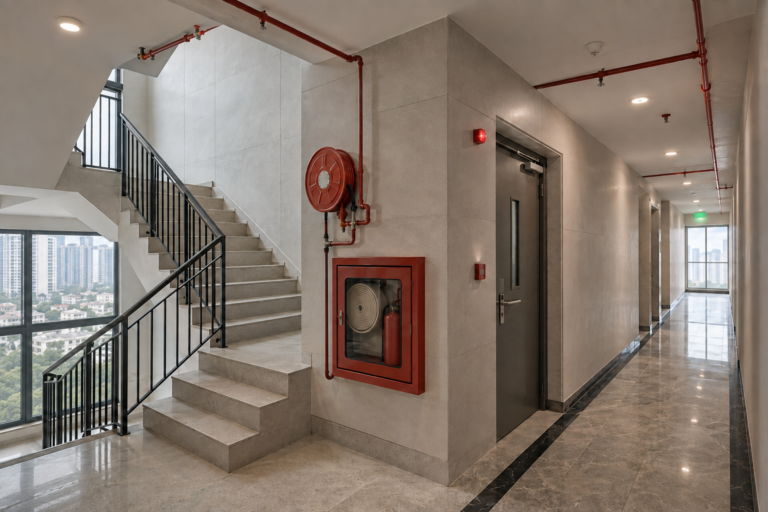
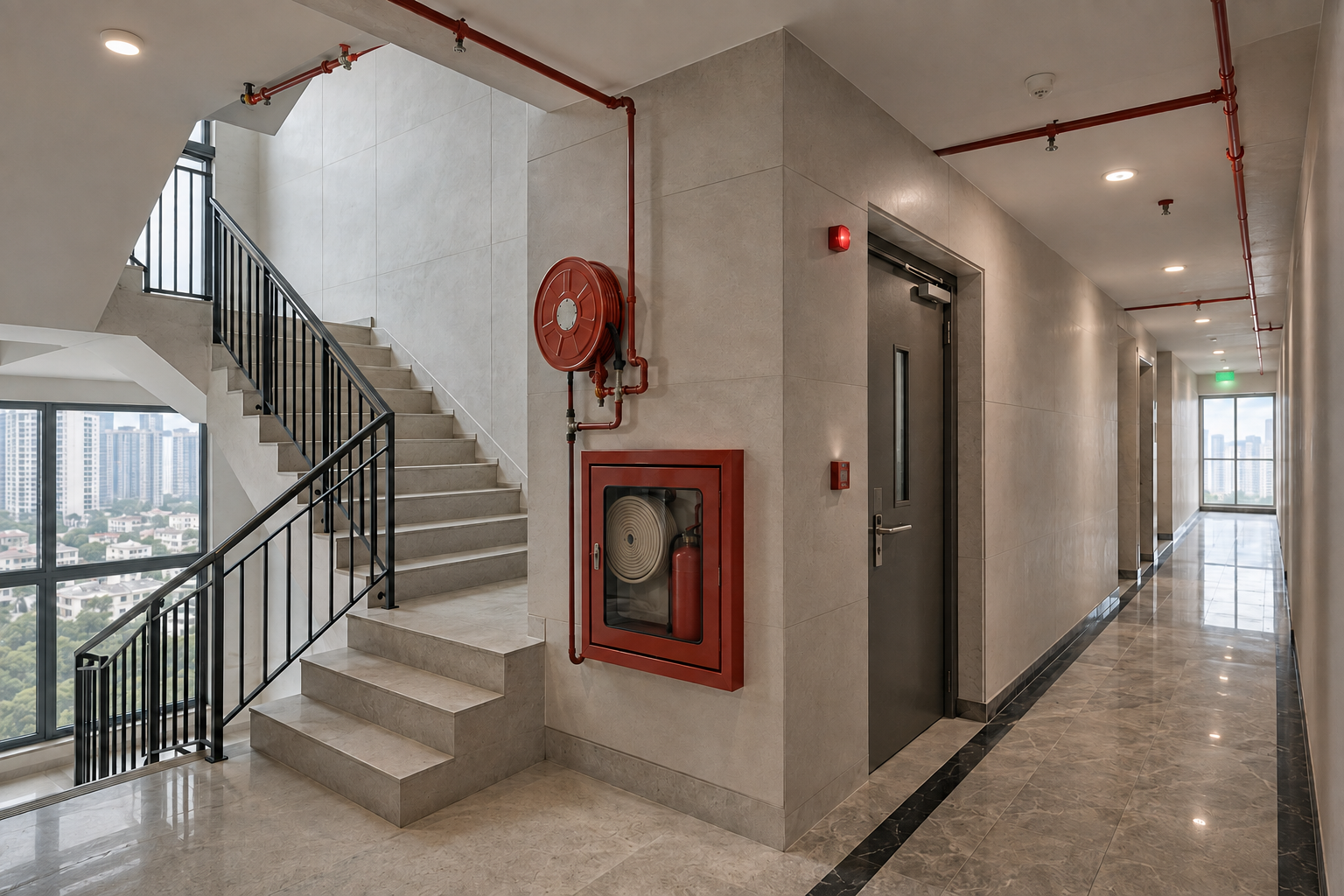
Inspect every evacuation staircase you can access
Do not stop at the decorative main lobby. Locate the fire stairs from the selected floor and walk down several levels.
Check whether:
- doors open easily without keys;
- stairs are free of cartons, bicycles and furniture;
- lighting and emergency signage work;
- doors close properly;
- there is no smoke or strong odour indicating poor sealing;
- stair width is unobstructed; and
- the final exit leads to a safe open area.
A staircase that becomes a store room cannot perform as intended during an emergency.
Locate alarms, detectors and manual call points
Look for smoke or heat detectors, alarms and manual call points in common areas. Ask when the alarm was last tested and whether residents can hear it inside apartments.
Some societies avoid full-volume tests because they inconvenience residents. That can also mean residents do not recognise the alarm. Ask whether drills and test notifications are documented.
Examine hydrants, hose reels and extinguishers
Equipment should be visible, accessible, labelled and maintained. Check inspection tags and whether cabinets are locked or blocked.
Ask the facility team:
- when pumps and hydrants were last tested;
- whether water pressure is logged;
- who maintains the system;
- whether fire tanks are dedicated and monitored; and
- whether trained staff are present on every shift.
Do not attempt to operate equipment yourself during a property visit.
Check fire-tender access
Emergency vehicles need an unobstructed route around or to the building as designed. Observe whether access roads are narrowed by parked cars, planters, guard cabins, vendor stalls or landscaping changes.
Visit in the evening when resident parking pressure is highest. Ask whether the society enforces no-parking zones and whether the fire tender has participated in a drill.
Understand basement risk and management
Basements can contain parked vehicles, electrical rooms, generators, pumps and storage. Inspect for:
- unauthorised storage;
- blocked exits;
- oil or fuel leakage;
- poor ventilation;
- exposed wiring;
- water accumulation near electrical systems; and
- charging arrangements for electric vehicles.
EV charging should follow the society’s approved electrical and safety framework. Informal extension cables and unplanned load additions deserve attention.
Ask about refuge and assembly arrangements
Depending on building design and applicable requirements, high-rises may include refuge areas or designated safe locations. Ask the facility manager to identify them and explain the evacuation plan.
Also identify the ground-level assembly area. It should not conflict with fire-tender movement. Residents should know where to gather and how attendance or assistance is managed.
Evaluate lift and emergency-power planning
Residents should not assume normal passenger lifts are safe to use during a fire. Ask how lifts respond to an alarm and whether a designated fire lift exists under the building design.
Check which emergency systems have backup power: alarms, emergency lights, pumps, public-address system and essential communication. Ask how generators are maintained and tested.
Review resident preparedness
Safety equipment is only part of the system. Ask:
- When was the last evacuation drill?
- Were residents and staff included?
- Is an emergency contact list displayed?
- Are security and housekeeping teams trained?
- Is there a plan for elderly residents, children and people with disabilities?
- Are incident and test logs maintained?
A well-managed society should be able to answer without defensiveness.
Also ask how new tenants, domestic staff and elderly residents receive safety instructions. A system is stronger when routine onboarding explains alarms, stair locations and assembly arrangements before an incident occurs.
Inspect the selected apartment’s own risks
Inside the flat, check the electrical distribution board, wiring quality, kitchen gas arrangement, smoke detector if provided and access to the main door.
Avoid unauthorised enclosure of balconies or service areas that may affect ventilation or escape. Do not remove structural or fire-rated elements. Ask a professional before significant renovation.
New launch: questions before booking
For an under-construction Noida project, review:
- fire-safety provisions in sanctioned plans and specifications;
- proposed stair and lift count;
- apartments per floor;
- fire-tender movement plan;
- phase-wise access if construction continues after possession;
- responsible maintenance entity; and
- approvals required before possession.
The UP-RERA model Agreement for Sale includes fire detection and firefighting equipment within common-area project obligations. Compare marketing promises with the registered and contractual documents.
Resale: request operational records
In an occupied society, ask for:
- official NOC verification details;
- recent system test and maintenance logs;
- pump and alarm servicing records;
- drill record;
- notices from fire or development authorities; and
- planned upgrade budget.
Review association meeting minutes for unresolved safety work or funding gaps.
Red flags that justify a professional audit
Pause if you find:
- locked or blocked fire stairs;
- expired or inaccessible equipment;
- no clear fire-tender route;
- basement storage in service areas;
- residents unaware of alarms or drills;
- a document that does not match the tower;
- major unauthorised construction; or
- facility staff unable to explain testing.
Do not accept “nothing has happened so far” as a safety assessment.
Final takeaway
Fire safety should be inspected like title, water supply and construction quality. Verify official documents, walk the escape route and ask for operational records. A responsible society treats preparedness as routine maintenance, not a one-time certificate.
First Step Realtors can help buyers collect Noida project and society information during shortlisting and arrange repeat inspections where needed. Visit www.firststeprealtors.in or call +91 9811454655.
FAQs
Can a Noida buyer verify a Fire NOC online?
The Uttar Pradesh Police Fire Services Portal provides a link to fire-service NOC functions and verification. Ask the society for identifying details and use the official portal.
Is a Fire NOC enough to confirm current safety?
No. Also inspect physical access and request current maintenance, testing and drill records.
Should buyers walk down the emergency stairs?
Yes, with permission. It is a simple way to identify obstruction, lighting and exit issues, but it does not replace a professional audit.
Suggested internal links
- Noida Society Maintenance Charges
- Monsoon Property Inspection Guide for Noida
- Noida Resale Apartment Due-Diligence Checklist
Sources
- Uttar Pradesh Police Fire Services Portal
- Noida Authority building regulations and directions
- UP-RERA model Agreement for Sale
Disclaimer: This article is a homebuyer awareness checklist, not a fire-safety audit, certification or legal opinion. Use qualified professionals and current official requirements.