Monsoon Property Inspection in Noida: What Rain Reveals Before You Buy
Most property visits happen on clear afternoons. The apartment is bright, the driveway is clean and a sales representative guides the route. Rain changes the inspection. It tests roofs, balconies, façades, basements, drains, approach roads and facility response at the same time.
For a ready or resale apartment in Noida, a monsoon visit can be one of the most informative due-diligence steps. The purpose is not to reject every building with a maintenance issue. It is to identify the nature, recurrence, repair history and financial responsibility before purchase.
Never enter flooded electrical or service areas, climb wet roofs or touch exposed equipment. Use a professional inspector for technical assessment.
Visit during rain and again after it
If safe, visit once during moderate rain and once within 24 hours of heavier rain. The first visit shows active leakage and drainage. The second shows standing water, damp patches and odour.
Ask residents how long water remains after a storm. A photograph of one wet road is less useful than a repeated pattern across multiple monsoons.
Begin outside the project gate
The approach road can determine whether the society remains usable during heavy rain. Inspect:
- water accumulation at underpasses and service roads;
- broken or submerged footpaths;
- open drains;
- traffic diversions;
- entry ramp slope;
- school-bus and emergency access; and
- pedestrian safety.
Drive the actual route from work, metro and hospital. A dry-day “five-minute connection” may function differently when low points collect water.
Observe the entrance and podium
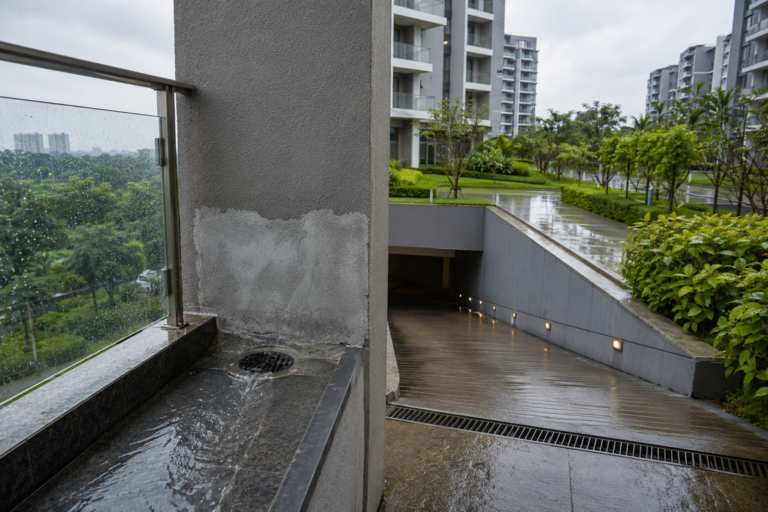
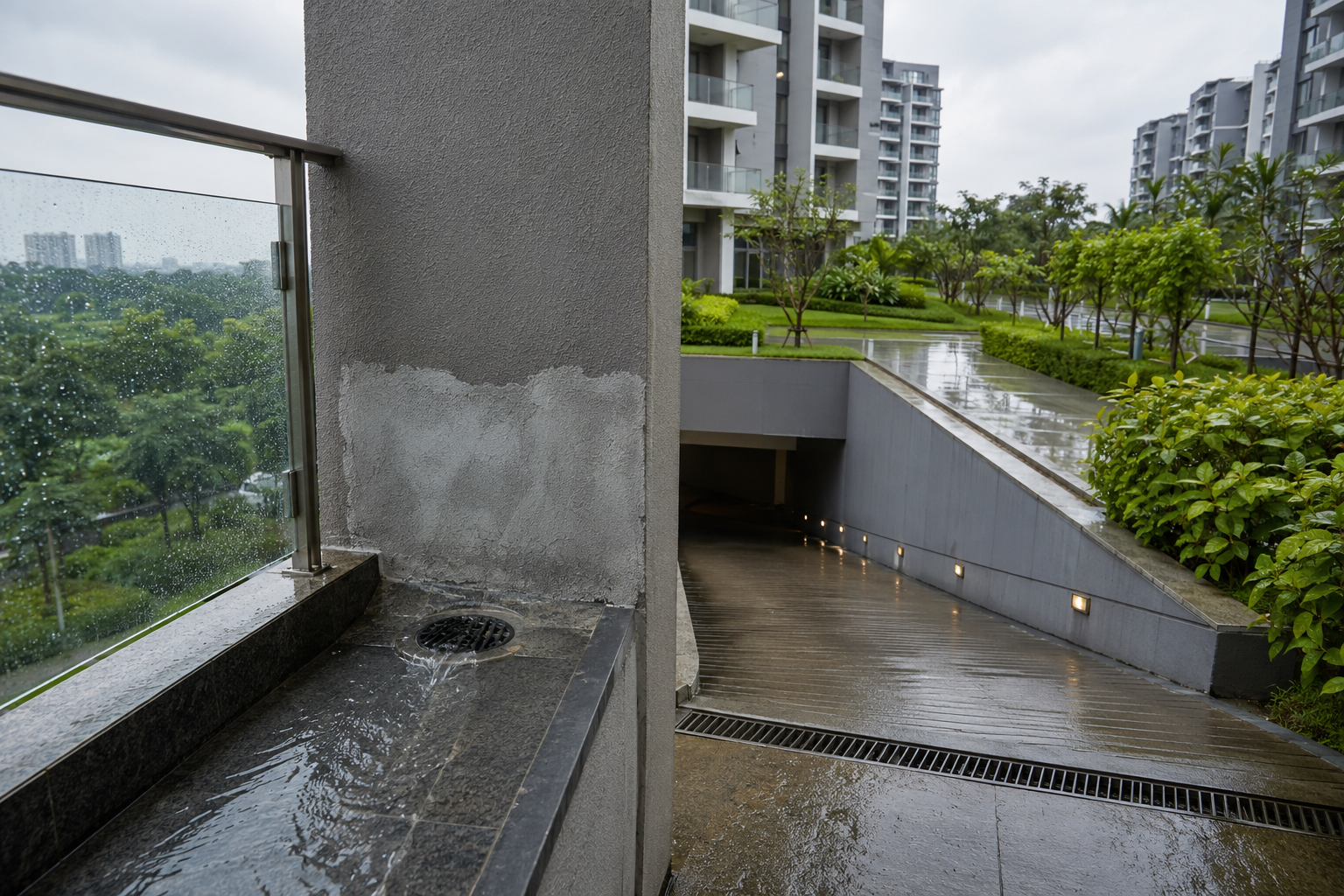
Water should move away from lobbies, ramps and electrical spaces. Look for temporary pumps, sandbags, patched expansion joints or repeated ceiling stains.
Ask whether the entrance flooded in previous years and what permanent corrective work was completed. Temporary pumping may be a sensible emergency measure, but routine dependence can indicate an unresolved design or capacity issue.
Inspect basement ramps and parking
Basements deserve particular caution because water, vehicles and electrical equipment share the space.
Look for:
- water lines on walls or columns;
- damp smell;
- rust on equipment or doors;
- active seepage through joints;
- clogged trench drains;
- standing water near electrical rooms;
- damaged flooring; and
- vehicles relocated from known low points.
Ask where sump pumps discharge, whether backup power supports them and when they were last serviced. Do not enter an unsafe or flooded basement.
Check the selected apartment wall by wall
Fresh paint can conceal an older damp patch temporarily. Inspect corners, window reveals, balcony doors, external walls, bathrooms, utility shafts and ceilings below terraces.
Use your senses:
- visual discoloration or bubbling paint;
- musty smell;
- cool damp surface;
- swollen woodwork;
- mould around silicone joints; and
- recent patchwork with a different finish.
Ask the seller when the area was last repaired and request invoices or complaint records. Repeated repainting is not the same as stopping the water source.
Test balcony slope and outlets
Balcony water should move toward the outlet rather than the room. Check for ponding, blocked drains, cracked tiles, failed sealant and an insufficient threshold at the door.
Review balconies above the selected unit. Water can enter through façade joints or another apartment’s drain. Altered balcony enclosures and AC drain lines may also redirect water.
Examine windows and façade joints
Wind-driven rain can enter around poorly sealed windows even when no problem appears in light rain. Look below window corners and along frames.
In high-rise towers, façade access and repair can be complex. Ask whether the society recently carried out sealant or façade work, whether a warranty exists and who bears the cost.
Review roof and top-floor risk appropriately
Top-floor buyers should ask for roof waterproofing history, ponding reports and access to maintenance records. Do not walk on a wet roof without authorised supervision.
Top floors are not automatically problematic; a well-maintained roof can perform reliably. The key is evidence of drainage, waterproofing and response.
Check bathrooms and service shafts
Rain-related dampness can mix with plumbing leakage. Inspect shafts, false ceilings, pipe penetrations and the wall shared with bathrooms.
Ask whether stains appear only during rain or throughout the year. A professional moisture test can help distinguish external penetration from internal plumbing.
Observe common corridors and staircases
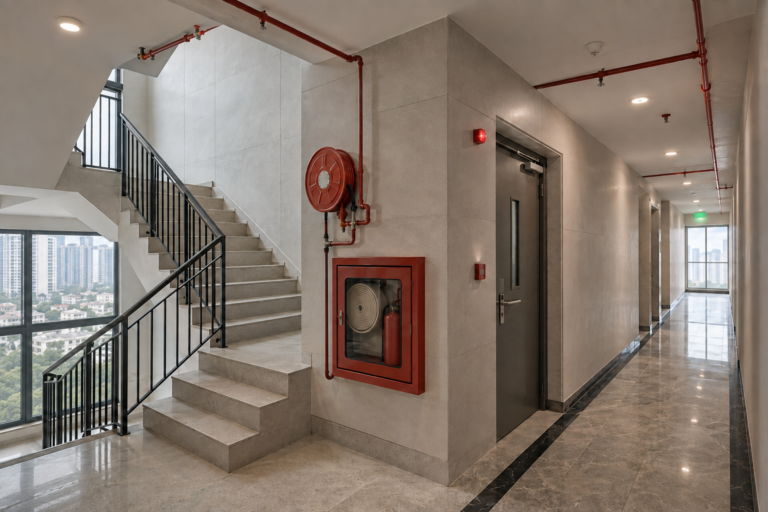
Open corridors can receive rain. Check whether floors become dangerously slippery, water enters lift lobbies or emergency stairs remain dry and clear.
Water near lift doors, panels or electrical equipment should be investigated. Ask about shutdown incidents and preventive measures.
Assess landscape drainage
Large lawns and planters should not direct water toward towers or basements. Look for saturated soil, retaining-wall seepage, eroded edges and overflowing drains.
Water bodies and fountains may be intentionally full, so ask residents which areas usually accumulate stormwater.
Review water supply during monsoon
Rain does not guarantee clean or reliable water. Ask about source, treatment, testing, tanker dependence and muddy-water complaints. Review whether basement water contamination has ever affected tanks or pumps.
Check the society’s communication records for boil-water notices, supply interruptions or equipment repairs.
Ask for records, not only reassurance
Useful documents include:
- waterproofing warranty and repair invoices;
- resident complaints;
- insurance claims;
- maintenance minutes;
- pump servicing logs;
- drainage cleaning schedule;
- façade audit or repair scope; and
- planned special assessment.
For a resale apartment, put known defects and agreed repairs in writing. For a new project, review defect-reporting and handover procedures.
Date every photograph and group it by tower, floor and location so later repairs can be compared against the original condition rather than memory.
Estimate the financial impact
Classify findings:
- unit-level minor repair;
- unit-level recurring issue;
- common-area maintenance issue;
- major building-envelope or drainage problem; or
- access and neighbourhood infrastructure issue.
Obtain professional estimates. A small window resealing should not be priced like major façade remediation, and a serious recurring problem should not be dismissed as “normal monsoon.”
Speak to residents in different towers
Water behaviour can vary by tower orientation and basement zone. Speak to ground-floor, mid-floor and top-floor residents. Ask direct questions:
- Which basement zones collect water?
- Do lifts stop during heavy rain?
- Which towers have recurring seepage?
- How quickly does facility management respond?
- Have owners paid special repair charges?
Multiple independent answers are more reliable than one sales explanation.
Add a monsoon clause to the inspection record
If a defect is found, record it with photographs, date, location and agreed responsibility. The sale agreement or possession record should specify repairs, cost adjustment or disclosure where appropriate.
Do not rely on a verbal promise that work will happen “after the season.”
Final takeaway
Rain gives a Noida homebuyer real information. It shows whether the apartment envelope, basement systems, access roads and maintenance team perform under stress. One careful monsoon inspection can improve negotiation and prevent an unpleasant first rainy season after purchase.
First Step Realtors can arrange repeat visits to shortlisted Noida properties, including post-rain inspections when conditions allow. Visit www.firststeprealtors.in or call +91 9811454655.
FAQs
Is minor seepage common and therefore safe to ignore?
No defect should be ignored. Determine the source, recurrence, repair method and structural or health impact with a qualified inspector.
What is the most important area to inspect after heavy rain?
Inspect the selected apartment, basement drainage, tower entrance and the real approach route. Together they reveal unit and neighbourhood performance.
Should buyers inspect an under-construction project during monsoon?
Site access may be restricted for safety. Review progress updates and request authorised visits only. Never enter an active construction area without permission and protection.
Suggested internal links
- Noida Resale Apartment Due-Diligence Checklist
- High-Rise Fire Safety Checklist for Noida Buyers
- Noida Society Maintenance Charges
Sources
- Noida Authority building regulations and directions
- UP-RERA project verification
- UP-RERA model Agreement for Sale
Disclaimer: This article is a general visual checklist. It is not a structural, waterproofing, electrical or environmental inspection report.