
Grade A+ Office vs Strata Office in Noida: What Commercial Property Investors Should Compare
Noida’s office market is becoming larger and more quality-conscious. Cushman & Wakefield reported 43.4 million square feet of office stock in the city as of Q3 2025, including 26.6 million square feet of Grade A+ assets. JLL’s 2026 Delhi-NCR research also noted that occupiers increasingly prioritise modern amenities, sustainability and building quality, with Noida emerging as an established technology hub.
For an individual investor, however, “office property” can mean very different products. One offer may be a small strata-owned unit sold floor by floor. Another may be space within a professionally managed Grade A+ asset with larger occupiers and institutional ownership characteristics.
The investment cannot be compared on quoted rental yield alone. Building quality, ownership fragmentation, lease structure, tenant covenant, common-area management and exit liquidity all matter.
What strata ownership means
In a strata-style office, individual units or portions of a building are sold to multiple owners. This lowers the entry ticket and gives direct ownership of a defined space, subject to the project’s title and common-area structure.
The model can work when the building is well located, occupied and professionally managed. Challenges arise when fragmented ownership makes leasing, upgrades, signage, façade work or common-area decisions difficult.
Ask how many owners exist, who controls facility management and whether the building has a unified leasing or asset-management strategy.
What Grade A+ describes
Grade labels are market classifications rather than one universal statutory certificate. Grade A+ generally refers to high-quality office stock with modern specifications, strong management, efficient floor plates, sustainability features, reliable services and occupier appeal.
JLL reported that Grade A+ buildings captured an increasing share of Delhi-NCR leasing and commanded a rental premium over broader Grade A stock by Q1 2026. It identified Sector 16B and the Noida-Greater Noida Expressway among prime Noida office locations supporting demand.
Do not accept the label without evidence. Review building age, certification, floor efficiency, services, management and tenant mix.
Start with title and RERA verification
Verify the project and promoter on UP-RERA where applicable. Obtain independent legal review of:
- land and development rights;
- registered unit or lease documents;
- sanctioned commercial use;
- completion and occupancy records;
- parking rights;
- common-area rights;
- mortgages or charges; and
- transfer restrictions.
A “pre-leased” label does not cure a weak title.
Analyse the tenant, not only the rent
For a leased office, request the full lease and amendments. Evaluate:
- legal tenant entity;
- business and credit strength;
- security deposit;
- rent commencement;
- escalation;
- lock-in and lease term;
- termination rights;
- fit-out ownership;
- maintenance responsibility;
- taxes and insurance;
- renewal options; and
- default history.
A high rent from a weak tenant on a short, easily terminable lease can be riskier than a lower rent from a strong occupier with meaningful commitment.
Verify rent receipts and bank evidence rather than relying on a projected lease sheet.
Distinguish gross and net yield
Marketing yield is often calculated as annual rent divided by purchase price. Net yield should account for:
- stamp and registration expenses;
- vacancy;
- brokerage on reletting;
- owner-borne CAM or shortfall;
- fit-out incentives;
- property tax and insurance;
- repairs and capital expenditure;
- financing cost; and
- taxes applicable to the owner.
Use conservative occupancy and expense assumptions. No commercial rent is guaranteed.
Review CAM and building operations
Common Area Maintenance, or CAM, can materially affect tenant occupancy cost and building competitiveness. Request the current CAM budget and escalation history.
Inspect:
- HVAC and operating hours;
- power backup;
- lifts and waiting time;
- security and access control;
- parking ratio;
- washrooms and common areas;
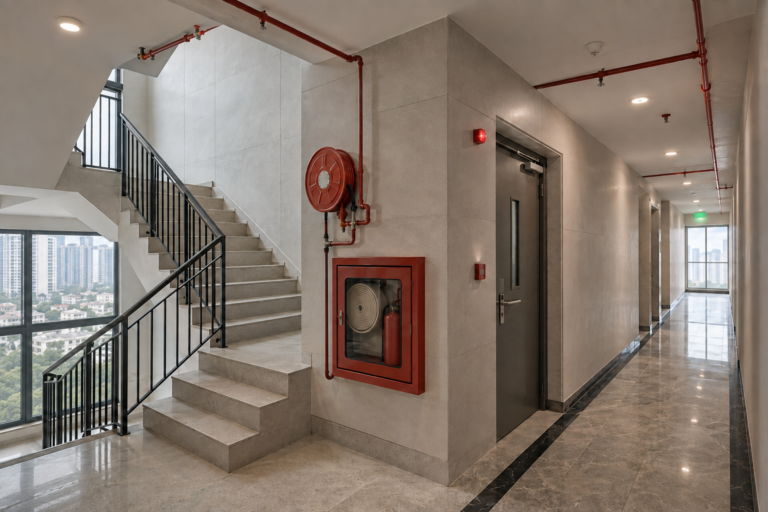
- fire and life-safety systems;
- food and employee amenities;
- sustainability certification; and
- public transport access.
If CAM is high but services are weak, tenants may move when the lease permits.
Ownership fragmentation and upgrade risk
Older strata buildings can struggle to agree on lobby refurbishment, energy upgrades, façade repairs or unified leasing. That matters because corporate occupiers increasingly value well-managed, sustainable offices.
Cushman & Wakefield’s Noida report forecast a shift in future supply toward more institutional or developer-owned Grade A+ projects by 2028, while strata-led completions were expected to reduce after a stronger 2026 pipeline. This suggests quality and professional management may become more important to competitiveness.
Ask who funds major upgrades and how owner voting works.
Unit size and floor-plate efficiency
A small unit may be easier for an individual investor to buy but harder for a large corporate to use. Multiple small owners can fragment a floor and limit contiguous expansion.
Review:
- usable carpet area;
- efficiency ratio;
- column grid;
- floor-to-floor height;
- natural light;
- floor load and services;
- ability to combine units; and
- fit-out condition.
Match the unit to the likely tenant segment: startup, professional practice, managed-office operator or large enterprise.
Location is a talent and access decision
Office value depends on employee commute, metro and road access, food, hotels and the surrounding business ecosystem. Sector 62, Sector 16B and Expressway office clusters serve different occupier profiles and travel patterns.
Test peak-hour access and metro last mile. A building’s official address may be close to an Expressway but difficult to enter from one direction.
Vacant office due diligence
For a vacant unit, ask:
- How long has it been vacant?
- What rent was last achieved?
- How many competing units are available?
- What fit-out contribution will a tenant expect?
- Which brokers actively lease the building?
- Are large occupiers renewing or leaving?
- What is the current CAM during vacancy?
Obtain three independent leasing opinions. Projected rent is not evidence of demand.
Pre-leased office due diligence
For a pre-leased offer, confirm that the lease survives the sale and that tenant deposits, notices and rights transfer correctly. Inspect the unit even if the tenant occupies it.
Check whether rent is artificially supported by a developer guarantee or master lease. Understand what happens when that arrangement ends.
Exit liquidity
Commercial resale can take longer than residential resale. A small unit may have a wider individual-investor pool but face competition from many identical listings. A larger, high-quality asset can attract sophisticated buyers but requires a higher ticket.
Consider remaining lease term, tenant quality, building age, management, title clarity and future supply. A high headline yield may signal perceived risk.
Request recent evidence of completed sales in the same building where available; asking prices alone do not establish how quickly an office can be exited.
A comparison scorecard
Score each Noida office on:
- title and approval clarity;
- building quality and certification;
- ownership and management structure;
- tenant strength;
- lease durability;
- net yield after expenses;
- CAM competitiveness;
- metro and road access;
- reletting prospects; and
- exit liquidity.
Do not let one attractive percentage outweigh the complete risk profile.
Final takeaway
Noida’s maturing office market can offer commercial-property opportunities, but Grade A+, Grade A and strata units are not interchangeable. Buy the title, building, management system and lease—not merely a yield printed in an advertisement.
First Step Realtors can help investors shortlist Noida commercial assets and coordinate collection of project, lease and operating information for independent review. Visit www.firststeprealtors.in or call +91 9811454655.
FAQs
Is Grade A+ an official government rating?
It is generally a market classification. Verify the actual specifications, certifications, management and tenant profile.
Is a pre-leased office risk-free?
No. Tenant strength, lease clauses, vacancy after expiry, title and building quality still matter.
Why can strata ownership affect value?
Fragmented ownership can complicate unified leasing, upgrades and common-area decisions, although well-managed strata buildings can still perform effectively.
Suggested internal links
- Total Cost of Buying Property in Noida
- Noida Metro Expansion and Property Buying
- Noida Airport Is Operational: What It Changes
Sources
- Cushman & Wakefield: Noida – Runway for Growth
- JLL: Premiumisation is redefining Delhi-NCR offices
- UP-RERA project verification
Disclaimer: Commercial property involves vacancy, tenant, title, financing and market risk. This article is general information, not investment, legal or tax advice.