How Infrastructure Shapes Property Prices
In real estate, location is important. But what makes a location valuable? The answer is often infrastructure.
A property does not become valuable only because of its building design or apartment size. Its value grows when the surrounding area becomes more connected, more livable, and more commercially active. This is why infrastructure plays such a powerful role in shaping property prices.
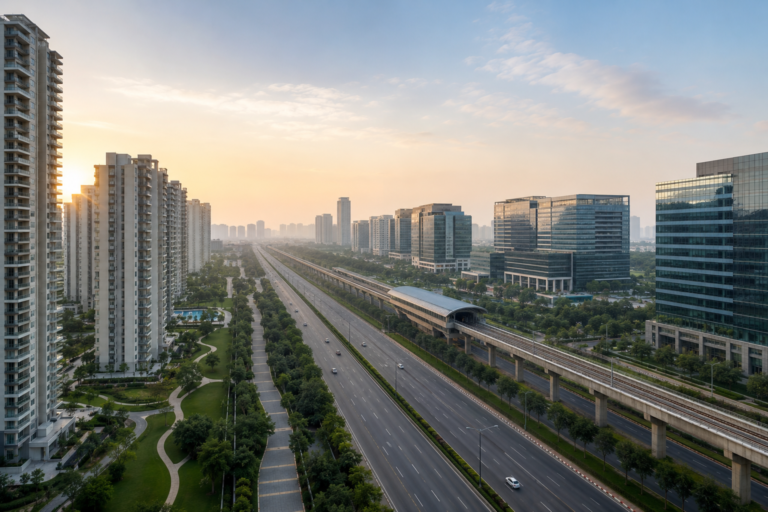
In Noida and NCR, infrastructure development has become one of the biggest drivers of real estate demand. Metro connectivity, expressways, airport access, commercial zones, malls, schools, hospitals, and road upgrades can directly influence how buyers and investors value a location.
According to the Day 10 blog plan, this topic should focus on how metro, expressways, and luxury towers together shape property prices.
1. Better Connectivity Creates Better Demand
The first way infrastructure shapes property prices is through connectivity.
When a location becomes easier to reach, more people are willing to live, work, and invest there. A good road, metro station, expressway, or airport link can reduce travel time and increase daily convenience.
For homebuyers, this means easier office commutes, school access, hospital access, shopping access, and airport travel. For investors, it means stronger rental demand and better resale appeal.
This is why properties near major infrastructure corridors often attract more attention than isolated projects.
2. Expressways Turn Locations into Growth Corridors
Expressways can transform real estate markets because they connect large regions and reduce travel time.
In Noida, the Noida-Greater Noida Expressway, Yamuna Expressway, and future regional road projects are helping create new residential and investment corridors. These corridors are not just roads. They become growth belts where residential, commercial, institutional, and industrial development can expand.
Recent reporting noted that NHAI is expected to build a 105-metre-wide road connecting Noida and Greater Noida with the Ganga Expressway, potentially reducing travel time to the Ganga Expressway to around 30 minutes.
When travel becomes easier, real estate demand usually improves. Buyers start considering areas they previously ignored because they become more practical for daily living and long-term investment.
3. Airports Create Long-Term Real Estate Confidence
Airports have a major impact on real estate because they create economic activity beyond travel.
A major airport can bring hotels, logistics parks, commercial offices, warehousing, retail spaces, service apartments, rental housing, and employment opportunities. This is why airport-linked locations often become important real estate zones.
In Noida’s case, Jewar Airport is one of the strongest infrastructure triggers. Recent coverage reported that as Noida prepares for the airport launch, the city’s land market is seeing strong interest, with Noida Authority preparing auctions for industrial, institutional, commercial, and hotel-use plots, including a commercial plot with a reserve price of ₹758 crore.
This shows how airport-led development can influence land demand and investor confidence. However, buyers should still evaluate actual distance, road access, approvals, and project fundamentals instead of relying only on “near airport” marketing.
4. Metro Connectivity Improves Livability and Resale Appeal
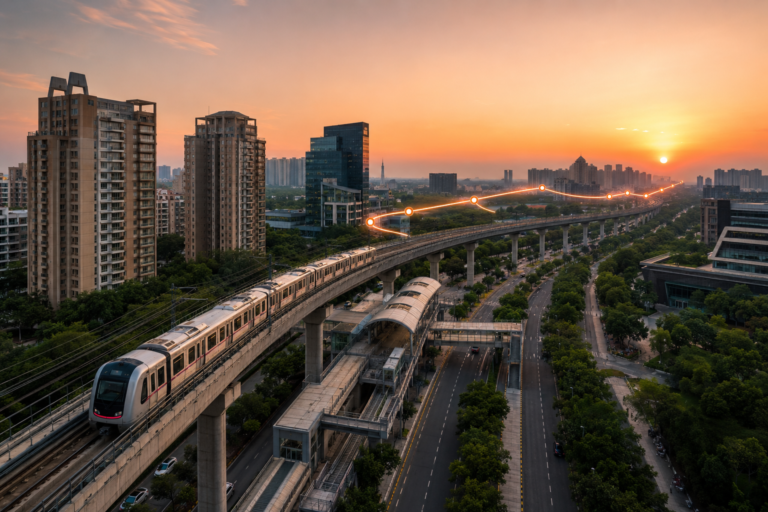
Metro connectivity is another major factor that shapes property prices.
A metro station near a residential project can improve daily convenience for working professionals, students, tenants, and families. It also makes the location more attractive for people who do not want to depend completely on private vehicles.
Areas with metro access often benefit from:
- Better rental demand
- Improved resale potential
- Higher footfall for nearby commercial spaces
- Easier office connectivity
- Reduced travel stress
- Better long-term livability
A recent Greater Noida investor guide noted that upcoming metro lines are expected to trigger another wave of price appreciation, with sectors near future stations already seeing early-stage investor interest.
For buyers, metro connectivity is not just a transport feature. It is a long-term value feature.
5. Road Upgrades Reduce Friction in Daily Life
Sometimes, even smaller road infrastructure projects can improve real estate value.
A flyover, underpass, interchange, service road, or elevated road can reduce traffic pressure and improve movement between sectors. This improves the everyday experience of residents.
For example, Noida authorities recently announced a ₹66 crore diamond interchange at Bhangel Elevated Road to improve traffic movement and reduce congestion.
Such projects may not look as big as an airport or expressway, but they matter for daily living. A location that is easier to enter, exit, and navigate becomes more attractive for buyers.
6. Commercial Infrastructure Supports Property Prices
Residential prices often improve when commercial infrastructure grows nearby.
Malls, office spaces, business parks, IT hubs, hospitals, schools, and retail centres make an area more livable and economically active. They create jobs, attract tenants, improve lifestyle convenience, and increase overall demand.
Greater Noida West is a good example of this trend. Recent reporting stated that Nirala World plans to invest ₹525 crore to develop a premium shopping mall called Nirala Diadem in Greater Noida West.
Retail and commercial projects like this can strengthen a location’s lifestyle appeal. Families prefer areas where daily needs, entertainment, shopping, and services are close by.
7. Infrastructure Helps Luxury Projects Command Premiums
Luxury housing depends heavily on infrastructure.
A premium tower without good connectivity may struggle to attract serious luxury buyers. But a luxury project located near expressways, business hubs, airports, metro routes, and premium social infrastructure can command better attention.
Luxury buyers usually look for:
- Smooth access roads
- Airport connectivity
- Nearby business districts
- Premium schools and hospitals
- Malls and entertainment zones
- Clean surroundings
- Low congestion
- High-quality public infrastructure
This is why infrastructure-backed luxury locations often perform better than standalone luxury projects in weak surroundings.
In Noida, luxury demand is increasingly connected to sectors and corridors with better planning, expressway access, airport-led growth, and improving social infrastructure.
8. Infrastructure Can Change Buyer Perception
Infrastructure does not only change travel time. It changes perception.
A location that was once considered “far” can become attractive after a new road or metro line. A sector that was once seen as future-oriented can become practical after schools, malls, hospitals, and offices arrive.
This perception shift can create strong price movement. Early investors often look for locations where infrastructure is planned but not fully priced in. End-users usually prefer areas where infrastructure is already functional or close to completion.
Both strategies can work, but they carry different risk levels.
9. Not Every Infrastructure Announcement Guarantees Price Growth
This is very important.
Infrastructure can shape property prices, but every announcement does not automatically create appreciation. Some projects get delayed. Some locations remain underdeveloped. Some developers overprice projects based on future promises.
Before buying, investors should ask:
- Is the infrastructure approved or only proposed?
- What is the expected completion timeline?
- How close is the project actually?
- Is road access already available?
- Is social infrastructure developed?
- Is there real end-user demand?
- Are prices already inflated?
- Is the developer reliable?
- Is the project RERA registered?
Smart real estate decisions are based on verified infrastructure, not only future claims.
10. How Buyers Should Evaluate Infrastructure Before Investing
When studying any property, buyers should look at infrastructure in three layers.
Current infrastructure:
Roads, metro, schools, hospitals, malls, offices, markets, and daily conveniences already available.
Upcoming infrastructure:
Approved expressways, metro extensions, airports, commercial zones, road widening, and transport upgrades.
Future ecosystem potential:
Employment generation, rental demand, commercial growth, premium community development, and long-term livability.
A location with all three layers can be stronger than a location dependent only on future promises.
Conclusion
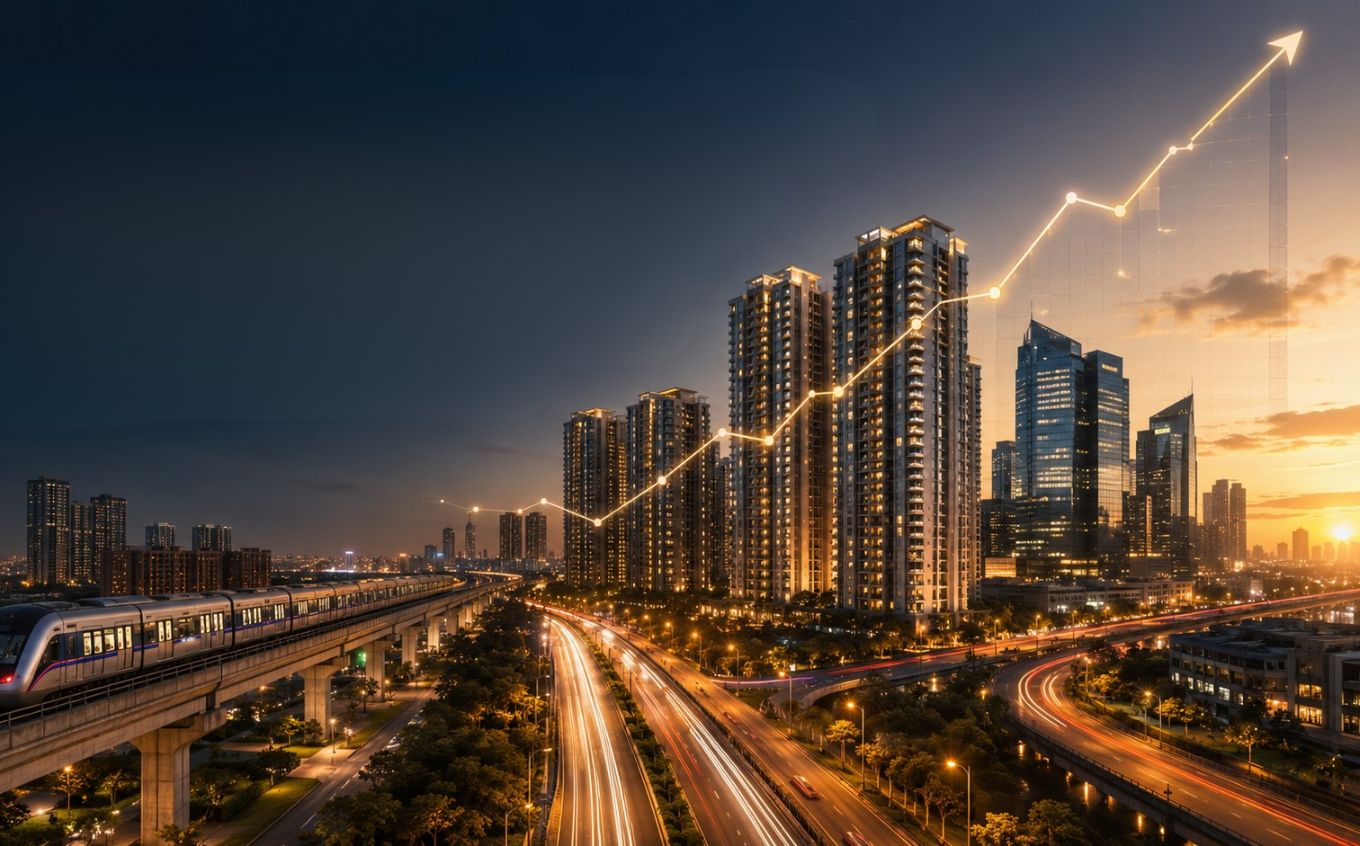
Infrastructure is one of the strongest forces behind property prices. Metro connectivity, expressways, airports, road upgrades, commercial hubs, schools, hospitals, and malls all influence how buyers and investors value a location.
In Noida, infrastructure-led growth is shaping the next phase of real estate demand. Jewar Airport, expressway corridors, metro expansion, road upgrades, and commercial development are all helping strengthen the city’s property market.
But buyers should remember one thing: infrastructure creates opportunity, not guaranteed returns. The best property decisions come from combining infrastructure potential with legal checks, developer credibility, location quality, and realistic investment planning.
In real estate, the right infrastructure can turn a location into a growth story.
Disclaimer
This blog is for informational and educational purposes only. Infrastructure timelines, property prices, rental demand, appreciation potential, project approvals, and investment returns may vary depending on government policies, execution delays, market conditions, developer performance, and location-specific factors.
Readers should verify RERA registration, legal approvals, pricing, project specifications, infrastructure status, possession timelines, and investment suitability before making any property-related decision. This blog should not be considered legal, financial, or investment advice.